Search This Blog

Showing posts with label Crime. Show all posts

Tuesday, 6 December 2016

Stalkers by Paul Finch

It's been a while since I've read any police procedural novels, mostly because my tendency when buying is to drift towards cosy or historical mysteries first. My mum, on the other hand, is very much a fan of police procedurals, so I ended up stealing this book off of her once she'd finished reading it. Which raises the question, have I been missing much in the genre?


The last thing that Mark Heckenberg needs to hear from his superiors at work is that the case that he has spent years building is to be shut down. When said case could potentially find almost 40 missing women who had no reason to disappear, he is even more unwilling to just let this lie. So he ventures out on his own, soon attracting the attention of Lauren Wraxford, the ex-army sister of one of the missing women, who forces herself into his investigation. Unfortunately, his investigations also attract the attention of the dangerous group responsible for these disappearances.
Right, so I have some mixed feelings about this. On the surface, Stalkers is a very competent thriller. It has a tense premise, with some very intimidating villains and the tension is kept high throughout. I guess the thing that kind of bothers me about Stalkers is the way that the subject matter is handled. You find out pretty quickly that the women abducted by the main villains are targeted to be raped and murdered, after being picked out by a rich man close to them. Considering how sensitive a subject rape is, and how often it involves specifically female victims, it has a weirdly "she had it coming" vibe at times. While the rapists involved are rightfully depicted as the scum that they are, the victim that the narrative follows at first has a line of thought that is distinctly male. She's going through her daily routine and thinking to herself how fortunate she is that she can rely on her looks to put her above women who are just as qualified as she is. Speaking from my experience, that does not sound believable. Women don't really think in that way, and honestly, if a woman is attractive enough to garner sexual attentions from their boss or coworkers, that shit is often entirely unwelcome. For the victim to be portrayed even slightly okay with her male coworkers leering at her invites the reader to think that she unwittingly encouraged her attacker. That will never be an acceptable attitude for me. So while Stalkers does get a lot right, I can't wholeheartedly recommend it, because it introduces an element of grey into rape, which should be as black and white as it gets.

While technically a good thriller, it portrays the victim as "encouraging" her attacker, and for me that just isn't acceptable. Maybe you might be able to overlook that, but it just leaves a bitter taste in my mouth that ruins what would have been an otherwise tense thriller. 2.5/5

Next review: Wild Magic by Tamora Pierce

Signing off,
Nisa.

Tuesday, 22 November 2016

The Benson Murder Case by S. S. Van Dine

Having done a bit of research into the Golden Era of detective fiction, I primarily knew S. S. Van Dine from his article "Twenty Rules for Writing Detective Stories". Since the rules seemed sensible enough, when I came across some of his writing I thought that I'd check out how well he could put his teachings into practice.


When playboy stockbroker Alvin Benson is killed, his social circle are in a furore trying to figure out who could have murdered him. Enter art enthusiast and amateur detective Philo Vance, who immediately notices some interesting features of the crime scene that the police seem to be overlooking. But will he be able to convince the police of the right culprit before an innocent citizen is arrested first?
This could have been a decent enough detective story, if it weren't for the detective. There is nothing even remotely likeable or interesting about Philo Vance. Admittedly, the fact that the first chapter does nothing but sing his praises and talk about his art collection didn't incline me positively towards him, and I found that further reading only confirmed my worst fears. Philo Vance is the snob that is quite happy to watch you work through a problem slowly and steadily, only to trash your work and declare that they knew from the start what the solution was. He bases his workings entirely on psychological profiling, despite appearing to be entirely alien to actual human emotions and drives. His singular emotion appears to be smugness, perhaps cynicism if I'm generous. I couldn't hate him more if I tried.
Additionally, the author-named character, Van Dine, is entirely pointless. He makes a big deal about his experience as a lawyer, and then does nothing with it. In fact, I forgot that he was even a character until right at the end, because he contributes absolutely nothing to the storyline. His entire purpose is to follow Vance around like an obedient puppy with a notebook and an obsession with noting down every possible detail about an encounter.

What could have been at least an average murder mystery is completely ruined by having the detective be an odious snob with no redeeming qualities, joined by a chronicler who might as well not be there. Don't bother with it. 1/5

Next review: Weekend by Christopher Pike

Signing off,
Nisa.

Thursday, 9 June 2016

Plugged by Eoin Colfer

I've been a fan of Eoin Colfer's since I was around 9 years old, mainly for his Artemis Fowl series. But I was only really aware of him as an author of children and young adult books, so when I saw Plugged, a crime novel for adults, I was intrigued.


Daniel McAvoy's life is decidedly on the discontent side. Working as a doorman at a seedy casino in New Jersey, he goes from dealing with sleazy customers at work to dealing with a psychotic neighbour and encroaching baldness at home. His life is about to become a whole lot worse, however, when his on-off girlfriend is found dead outside the casino and his best friend, a doctor practicing without a license and with a dubious grasp on both medical procedure and good business practices, goes missing. With conspiracies crowding in and making his life ever more hazardous, Dan must draw on his former army experiences in order to get out alive.
Normally I would shy away from a crime novel that was this blatantly aiming for humour, but because my experiences with Colfer's work has been largely positive thus far, I decided that I'd give it a shot. It works really well, and for one reason that is normally absent in crime fiction. I think the reason that the comedy works in Plugged is because all the characters are kind of rubbish. Normally in crime fiction, the stakes are really high and every mistake is going to come back at some point to bite the characters where it hurts. In Plugged, everyone involved are ultimately small players in the wider scheme of things. They're not in New York proper, they're in some ratty small town in New Jersey. While the crime boss that Dan has to deal with is a threat, he's only a big player on this small stage. It makes it feel kind of like a story that the Cohen brothers would direct, full of characters who are, to quote the game Fiasco, full of "powerful ambition and poor impulse control". Mistakes happen almost constantly throughout the narrative, and it's absolutely wonderful to see Dan just have to add that to the list of shit that he needs to deal with. It really makes the humour work, and I was already a big fan of Colfer's sense of humour. I don't think I've grinned so much at the bus stop in a long while.
In comparison to the comedy side of things, I think that the actual crime part could use some work. While I'm all for seeing more of Colfer writing about these small-time crooks, I think the tone maybe needs a bit of tightening. While I did like the humour, I thought that it was sprinkled perhaps too liberally during the scenes that should be really tense. Shootouts and standoffs feel like they should be handled more seriously, even if the people involved are nowhere near as important as they think they are. I mean, considering how high the body count gets, it doesn't really feel all that shocking, even when it really should do. It's not a huge problem for me, but if you like your murders with a bit more seriousness then this might be a bit blase for you.

A very funny novel about conspiracies and small-time crooks who want to be big-time crooks. The humour is absolutely stellar, though it does take away from the impact of some scenes that would otherwise be more shocking and impactful. 4/5

Next review: The Voyage of the Dawn Treader by C. S. Lewis

Signing off,
Nisa.

Saturday, 21 May 2016

The Murder at the Vicarage by Agatha Christie

I have been a fan of crime novels, especially the sub-genre of cozy mysteries for some time now. So it's perhaps a bit remiss of me to have read almost nothing from Agatha Christie. Up until now, I had only really read the first novel and some short stories from her Hercule Poirot series. I remember liking the writing, but found Poirot and Hastings less than engaging as protagonists. So I just never got round to reading anything else of hers. But my mum has always recommended the Miss Marple series to me, so when I saw The Murder at the Vicarage, I figured that I had nothing to lose through trying it.


In a careless comment over dinner, the parson of St Mary Mead expresses his frustration at one of his parishioners by stating that whoever murdered Colonel Protheroe would be doing the world a service. So it is with more than a little chagrin when the Colonel is found dead in his study only a day later. While the parson works with the police to try and bring the murderer to justice, he finds that his elderly neighbour, Miss Jane Marple, may be a little sharper than the rest of them put together.
I feel a bit torn about The Murder at the Vicarage as a novel. On the one hand, the mystery has almost everything that I like about cozy mysteries present and accounted for. There's the village setting that is just a little more unnerving than it is inviting, populated mostly by nosy, gossiping old women and the unfortunate people who must deal with them. There's the victim who was more or less disliked by everyone who knew him, including his wife and daughter, though the reader doesn't really see enough of him alive to make much of an impression of him. The mystery itself is engaging and much more devious and misleading than I initially gave it credit for. And the writing is wonderful, with some unexpected instances of humour. So far, so good.
On the other hand, it is the final element that I look for in a cozy mystery that was somewhat lacking, and the fact that it's lacking at all confuses the hell out of me. Considering that it is the first in the Miss Marple series of mysteries, I was expecting Miss Marple to be there a lot more than she was. I mean, I liked what I saw of her very much: the kind of old lady that is perfectly pleasant and unassuming in manner, but who you cannot get anything past, much as you try and hide it. As such, I was rather disappointed that she didn't appear for more than half of the actual novel itself. I mean, she does start to turn up more often towards the end, but until then it doesn't really feel like she's really playing a huge part in her own novel. I wouldn't say it's a complete dealbreaker, but if you don't like the parson then you are really in for a bad time, seeing as he's our narrator. I personally found him a bit colourless, but otherwise inoffensive. If it were any other genre, or if I weren't aware that this is Miss Marple's show, then I would have preferred a narrator with a bit more personality to him, but as it was I wasn't overly concerned.

As a mystery novel, this is more than serviceable and will almost certainly have you guessing wrongly by the end. My only real issue with it is that for a Miss Marple mystery, I had expected her to actually be present and attended for in more than half the novel. While I would have liked to see more of her, The Murder at the Vicarage was written well enough that I still had a decent mystery to sink my teeth into. 4/5

Next review: Prince Caspian by C. S. Lewis

Signing off,
Nisa.

Tuesday, 10 May 2016

Past Mortem by Ben Elton

Past Mortem was one of those books that I picked up on a whim, purely because I fancied a bit more crime fiction on my shelf. I guess the main draw for this in particular was the focus on Friends Reunited, a site that will soon be relegated to the dustiest corners of internet history. Having only just gotten to this three months after the site was shut down, I feel that this book may go down the same route in my memory.


Past Mortem follows Detective Inspector Edward Newson, a mild-mannered policeman whose life, both personal and professional, could do with a bit of a pick-me-up. In his personal life, he finds himself signing up to Friends Reunited and trying to track down the objects of desire from his teenage years in an attempt to smother his current infatuation with his very much spoken for coworker, Natasha. At work, he is presented with a series of strange and gruesome murders, each incredibly distinct in method of execution but all sharing the same acute attention to detail and an odd series of music choices used to cover the screams. As he gets roped into a school reunion, he finds his personal and professional lives clashing in spectacular fashion.
I find myself less than impressed with Past Mortem as a novel. While the mystery itself, which (as you've probably guessed) is linked with people on the Friends Reunited website, did have an interesting premise and a few good twists and turns, it was let down by some characters that were at best lacklustre and at worst either totally unsympathetic or so poorly written that they ceased to make sense, as well as an ending that flailed because of an obviously flagged murderer and poor pacing.
So, to the characters first. When it comes to a crime novel's main detectives, I think it is reasonable for them to be sympathetic to the audience, otherwise you get the readers rooting for the murderer, a situation that I think most of us are okay avoiding. In the case of Past Mortem, you have Ed Newson and his coworker/object of affection Natasha Wilkie. Or rather an annoying Nice Guy with an obsessive crush on Blandy McNiceLegs. Honestly, I got to the end of the book and still have very little idea what kind of personality Natasha is supposed to have, but gosh the text wants everything to come across as cheery and perky. But at least with Natasha she's just boring. With Newson, there seems to be an assumption that because he isn't a blokey-bloke like most police officers apparently are, and is instead mild-mannered and self-deprecating, that the audience should automatically like him. While I can see the overall concept working, it tends to be more successful when the tone is less whining along the lines of "Why does my coworker like her boyfriend more than me?! I mean, look at me, I'm treating her with a modicum of respect, doesn't that count for something?" or "Oh no, I stuck my dick in crazy, and now she's stabbing herself in my bathroom, however will I cope?" He comes across like a petulant child, and it is really not a flattering quality to have. Additionally, his behaviour towards one of the women he sleeps with in the book is really quite callous, and the author doesn't seem to understand that fact. The first woman he sleeps with reveals how severely she was bullied while they were in secondary school, as an explanation for some of her wilder, more self-destructive behaviour. Reading it as a woman, it is a recollection that comes across as very real and definitely humiliating enough that I can understand it really leaving a mark. His reaction is essentially "Well, your bully was never mean to me, so you must be exaggerating." It's just so telling that he doesn't care about her in the slightest, though I'm sure that Elton would try and argue otherwise. As for the bad guys of the piece, their characterisation is messed up through a complete lack of balance. The red herring has a weird about-face, going from someone genuinely looking to repent for being a little shit when he was a teenager, to someone actively taunting the police and acting so smug that I almost thought the genre had shifted to that of children's action-adventure cartoon, something in the vein of Inspector Gadget in terms of subtlety. It's made all the more irritating by the fact that it's obvious that he's a red herring and stealing time away from the actual murderer. The real culprit goes through the novel with so few scenes that I could probably count them all on one hand. By the end, it means that he's caught, but there's no satisfaction from it because you don't really know anything about him apart from the basics. The motive is gestured at broadly, but not in any real depth because the book just isn't interested in it, which is a shame.
As for the ending, it just falls flat entirely. I mentioned above that the red herring was annoying because it's so obvious that he's a red herring. Well, that could be said for most of the last quarter of the book, where (at least for me) it became obvious who the murderer was, only for the plot itself to focus on everyone but the murderer. Then after whole chapters of flailing around pretending to be busy, they catch the killer in the act and there are 4 and a half pages wrapping things up. I can't help but wonder whether Elton just lost interest after the killer was caught and twatted round the head with a truncheon. Murderer's caught, everybody go home, but not until after you've caught the end of the romantic subplot tumour that was the real reason you stayed to the end. That's not a resolution, that's the evidence of a man with a rapidly approaching deadline or rapidly diminishing levels of interest.

What could have been at least an average crime novel manages to fail on almost every level. The characterisation is poor at best and the pacing is almost criminally awful in the last quarter or so of the book. The crimes themselves are interesting and satisfyingly gruesome, but they're not enough to save Past Mortem from its own huge failings. 2/5

Next review: Dolores Claiborne by Stephen King

Signing off,
Nisa.

Saturday, 16 April 2016

Nobody True by James Herbert

Sometimes I pick up books because I read the premise and I just know instinctively that I need to read the book proper to find out what the author has done with that scenario. Nobody True was one of those books. Considering that my last encounter with James Herbert was mixed at best though, I was somewhat wary going into this, regardless of my enthusiasm for the premise. 


Nobody True follows Jim True, a man who is ordinary in all but one way: he has had incredibly vivid out-of-body experiences ever since he was a young boy. While he is on one of these out-of-body experiences, he returns to his body to find that he has been murdered and his body horribly mutilated while his spirit was away. He finds himself searching for his killer, but first he must figure out whether he was the victim of a serial killer who had similarly mutilated their victims, or whether his murderer was someone he knew and was close to. But even if he can figure that out, is there anything that he can actually do in his now-permanent incorporeal state if he does discover the culprit. 
I really wanted to like Nobody True, but I knew that it was a dud when the first seven chapters or so focused on his childhood from the age of 3 onwards and his career in advertising. If anything was an example of the importance of judicious cutting when writing a second draft, then this is it. I did not pick up a horror novel because I wanted to find out how the everyman protagonist started up his advertising business in excruciating detail. I want to see the everyman protagonist struggle with their own impotence and lack of importance within the universe. That fact that Herbert then proceeds to add footnotes that are both long-winded and almost wholly unnecessary to the actual plot only makes the proceedings all that more infuriating. 
I could have coped with that if the characters were half interesting. They really weren't. I mean, your main protagonist is a guy who actively wanted to be in advertising. There isn't really much you can do to save that character. Honestly, this is the most boring, white-bread character I've seen in a long, long time. I really couldn't care less who actually killed him. The fact that the serial killer that I mentioned previously is only evil because they have a physical disability is also really intensely uncomfortable and not in the manner that I had willingly signed up for. 

Having read Nobody True, I have come to the conclusion that James Herbert was an author that had a great eye for a book premise, but didn't seem to understand that the reader doesn't need to know everything about the main character's backstory. The whole book feels in need of a brutal but necessary trip to an editor, and the main character couldn't be more boring if he tried. A swing and a miss on pretty much every count, which is a shame because I really wanted this to be good. 1.5/5 

Next review: The Fire Thief by Terry Deary 

Signing off, 
Nisa. 

Monday, 21 March 2016

Blood Work by Michael Connelly

I think that Blood Work was probably one of several crime novels that I have picked up during my trawls of the second-hand book stalls while staying with my grandparents. As such, this was probably more or less a whim purchase, picked up for a striking blurb.


Blood Work follows Terry McCaleb, a retired FBI agent who is taking time out to renovate his late father's boat whilst he recovers from a heart transplant. The last thing he is looking for is someone knocking at his door asking him for help. But when the sister of his new heart's donor comes by, he finds out that he is only alive as a result of a murder and he cannot bring himself to refuse the woman's request for help in finding the killer.
I wanted to like Blood Work more than I did. At its core, there is a solid enough mystery with some interesting turns and some genuine surprises worked into the mix. My main problem with it is that there are some pretty big departures from reality that are difficult to ignore, for me at least. You see, in my day job I work as hospital administration. So when the book makes all these errors about how hospital systems and security works, it makes me more than a little antsy. Firstly, there's the fact that Graciela, the victim's sister, meets up with McCaleb a mere two months after he's had his transplant, but only a couple of days since she actually started looking for him. Considering how much emphasis healthcare systems put on keeping donations private, you would think that it would take her years if she could figure it out at all. But nope. One article and the knowledge that he got a heart transplant right around the time that her sister was murdered and she rushes out to meet this guy on a hunch and just completely bypasses a system of anonymity set up in order to protect patient confidentiality. Later on, there's a particular system at the hospital that McCaleb needs to take a look at, and since he can't get an official warrant due to being retired, he manages to persuade two separate healthcare professionals to completely ignore their duty to protect their patients' confidential information and gets them to pull both patient and donor records. I'm sorry, but I call so much bullshit here. It's quite funny really, because mere paragraphs later he feels guilty for committing a crime by briefly impersonating a police officer, when he's already made his friends do far worse. I read this and had to conclude that Connelly either didn't know much about how hospitals work or just didn't care to be accurate, because I can't think of a single consultant or nurse who would risk being struck off or be stuck with a civil/criminal lawsuit all on the word of one civilian working on their own with no court order. He'd be kicked out before he could even finish introducing the idea. Considering that the law enforcement bit seems to ring more or less true, it disappoints me that the healthcare system is written so poorly. I appreciate that this may be a minor thing to most readers, but after two years in the NHS this stood out like a sore thumb and it just pissed me off to no end.
My other issue with Blood Work is that the ending seemed a bit clunky compared to the rest of the novel. For the majority of the book, there's a nice consistent pace that's fast enough to be gripping, but not so fast that it becomes exhausting. Then with about 40 pages to go, it has a moment where everything screeches to a halt, lull you into thinking that it's ending, then start up again. The last 30 pages didn't fit right because the pace seemed so uneven compared to what had gone before. More of a minor quibble for me, but for people not pissed off by basic misunderstandings of how hospitals work, I would imagine that this is the more pressing issue.

Really, I think I would have enjoyed this a hell of a lot more if Connelly had put the same effort that he puts into depicting law enforcement into his depiction of healthcare systems. As someone who works in a hospital, the liberties that he takes with patient confidentiality and the consequences of breaching it are glaring enough to completely distract me from the narrative itself. Not a bad crime thriller, but it has a lot of creative liberties taken that don't pay off. 3/5

Next review: I, Lucifer by Glen Duncan

Signing off,
Nisa.

Tuesday, 8 March 2016

Agatha Raisin and the Quiche of Death by M. C. Beaton

I had a lot of high hopes going into Agatha Raisin and the Quiche of Death. Firstly, that title. It couldn't be more ridiculously British, could it? Secondly, a blog that I used to follow raved about this series. Thirdly, after the utter disappointment of De Sade's Valet, I was really hoping for something good to make up for it.


Our protagonist, the eponymous Agatha Raisin, is a middle-aged public relations guru who decides that it is time for her to take an early retirement and settle down in her dream cottage in the Cotswolds. Finding that her entrance to the village hasn't made as big of a splash as she would have hoped, she decides that the easiest way to make an impression would be to win the local quiche-making competition. Not being the baking type, she enters a quiche that she brought at a London deli. Unfortunately, the competition judge is found dead from poison after eating said quiche, giving her an instant reputation as both a cheat and a possible poisoner. She takes matters into her own hands in order to salvage what is left of her pride.
The Quiche of Death was exactly what I needed after my last disappointing read. I make no secret of the fact that I am enormously fond of cosy mysteries, and this first entry to the Agatha Raisin series ticks pretty much all of the boxes for qualities that I look for in that genre. First, there is an engaging main character/detective. Part of me feels that I may like Agatha because she embodies what I imagine that I will be like in my middle age: childless, lacking in both patience and social skills, and more than a little snobby, but with good intentions nonetheless. It is quite refreshing to have a protagonist who manages to rub everyone up the wrong way almost by accident. While her detective work wasn't as focused as I'm used to, it managed to blend into her general attempts to fit into village life rather well and didn't seem so out of place.
Second, the setting is pretty much perfectly depicted. In describing Carsely, Beaton manages to tread the fine line between twee and unnerving that is essential when depicting English villages. On the one hand, it is pretty and twee enough that it feels understandable why Agatha would settle there, being quiet and very traditional, contrasting nicely with her old life in London. On the other hand, it has to have that weirdly insular and unnerving feeling that I can only describe as "localness", the knowledge that you will pretty much be forever an outsider and the shockingly short amount of time that it takes for gossip to spread. There's a great line where Agatha's awful neighbour is being discussed, and within the same statement she's described both as an incomer and having lived in the village for over 20 years. It's that duality that makes Carsely seem believable.
I would say that the actual mystery part was a bit weaker, but not enough that it started affecting the quality of the novel itself. I suppose my main issue with it was that there didn't really seem to be much in the way of suspects or the kinds of big reveals. While it fit with the slower, more tentative pace set by Agatha learning her way around a new home, I don't think the mystery itself could have stood up as well by itself. I wouldn't say that it's a particularly big issue though.

A thoroughly enjoyable first installment to a detective series and I shall certainly be looking out for further entries to the series. Definitely recommended to fans of cosy mysteries and books about village life. The mystery itself is kind of weaker than your classic mystery plots, but I don't think the plot suffers hugely for it. Maybe one to pick up when you're in the mood for something a bit gentler. 4/5

Next review: Envy by Sandra Brown

Signing off,
Nisa.

Friday, 26 February 2016

Ratking by Michael Dibdin

I honestly have no memory of why I picked up Ratking out of all the other crime novels available. I guess it might be that I had heard that crime novels based in Italy tend to have an interesting focus on corruption and wanted to see what that was like. Quite possibly it might just be that the cover featured an actor whose work I am rather fond of, and I wanted to read the book before potentially tackling a new series. What can I say, I'm fickle.


Ratking is the first book in a series following Italian police detective Aurelio Zen. After being unofficially demoted due to his actions on a past case, he finds himself being assigned to active duty again as part of a kidnapping case involving wealthy industrialist Ruggiero Miletti. What he arrives in Perugia to find is a fractured, unhappy family unwilling to cooperate with the police, a magistrate determined to find guilt for the kidnapping amongst the victim's family and a force unwilling to work for an outsider. All of this only makes the delicate situation with the kidnapping even more precarious, and Zen only has one chance at salvaging his career.
Having finished the novel now, I find myself a bit torn. On the one hand, it is a very competently written crime novel, with no real glaring faults for me to latch onto. I suppose the thing that gives me pause most of all is more that I don't think I've ever read a detective novel where the main investigator is quite so willing to be completely underhanded in his methods. While I'm sure there are points in any crime novel where the investigator has to confront the whole question of do the ends justify the means, Ratking takes things further than I'm used to. There is no other series where I look at how the investigation has proceeded and think to myself that the detective stealing a car and planting it somewhere suspicious just so that it can be brought in for forensic testing is a reasonable course of action. While I can appreciate that the nature of the difficulties that Inspector Zen deals with do sort of warrant the extreme lengths that he will go to, it is a bit disconcerting that he does it so blithely. It doesn't really detract from the quality of the story-telling, it just might be a point to take into consideration if you were thinking of picking up Ratking: Aurelio Zen very much proves that you don't have to be nice or play fair in order to be a good person, and if you like your detectives to be more noble and just in their actions this may be a serious issue.

Definitely an interesting and rather more sleazy take on the crime genre. The problems with bureaucracy and privilege are clearly spelled out, and the methods that the main character uses are underhanded enough to match. If you want a more traditional detective with an unspoken code of conduct, you may wish to look elsewhere, but if you're looking for something a little different, then this might be your answer. 4/5

Next review: De Sade's Valet by Nikolaj Frobenius

Signing off,
Nisa.

Monday, 22 February 2016

Aberystwyth Mon Amour by Malcolm Pryce

Okay, so this one I picked up more or less purely for the title. You can't deny that as a title Aberystwyth Mon Amour is memorable and more than a little silly, so why on earth wouldn't I pick it up? Besides, I'd been looking to read some a bit more noir, so this fit the bill in more than one way.


Aberystwyth Mon Amour follows a down-on-his-luck private investigator named Louie Knight after he is visited by notorious singer and bar wench, Myfenwy Montez. She asks him to search for her young cousin, an unpleasant youth known as Evans the Boot. What seems like a simple case soon turns strange, as he finds that Evans is not the first schoolboy to go missing, and that the case may involve the Grand Wizard of the Druids, head of the local school and leader of a seriously shady faux-Mafia group.
This book is the most surreal experiences I've had in a long while. Admittedly, when you go into a book knowing that it is Welsh Fantasy Noir, you have at least an inkling that you're in for a weird ride. But then details about the case start coming in and it goes onto a whole other level of strangeness: Druids running the town both legitimately and not, the local ice-cream vendor doubling as the local philosopher/informant, tea cosy shops being a cover for dodgy dealings, war veterans from Patagonia, and much, much more. Whenever I state some of the weird stuff that makes up the world-building in this book, I can't help but be surprised that it isn't more difficult to follow plot-wise. The story itself is remarkably easy to follow; daft as a brush, but surprisingly credible nonetheless. My only real issue with it really is that there are parts of the narrative, the ending in particular, where it feels a tad rushed and could have really used a bit more detail. As for the characters, I feel that some of them deserved more attention, in particular Calamity Jane, but overall they were nicely fleshed out. I'd be more than happy to read the next installment if I were to come across it.

A solid and thoroughly weird Fantasy Noir book. If you fancy a Detective Noir book that is willing to poke fun at itself, then you're in luck. At times it feels like all the surreal elements shouldn't work together so well, but somehow it gets the tone just right. The only main issue is a rushed ending. 4/5

Next review: Ratking by Michael Dibdin

Signing off,
Nisa.

Tuesday, 26 January 2016

The Surrogate by Tania Carver

I picked up The Surrogate for the very simple reason that I'd never read anything where the plot occurs somewhere that is local to me, let alone a crime series. As such, I was curious to see how the more-or-less peaceful market town that I'm familiar with would be portrayed.


The Surrogate follows DI Phil Brennan as he is called to the scene of a serial killer's latest brutal crime. This killer has been targeting heavily pregnant women, incapacitating them and then removing their unborn child. With significant pressure from his superiors to get the murderer behind bars, quickly if possible, a criminal profiler is brought in to assist their more traditional police work. But the woman they bring in, Marina Esposito, has some unresolved history with the local police, and with DI Brennan in particular.
I think I might have an inkling how weird it must be for Londoners to keep reading about murders happening practically on their doorstops now. Even though I knew it was coming, I had quite a few moments when reading this initially where my brain would pause and go "I used to go swimming there". Not especially helpful when reading about the killer stalking his next victim, but there you go. It mostly wore off by the end, so I guess it must be a feeling that wears off pretty quickly. For the most part, I did sort of wonder why the author had chosen Colchester of all places to place her murder mystery. There is a line right at the beginning of the book where one of the officers gives the whole "crimes like this don't happen in a town like Colchester" spiel, only to refer to Ipswich not expecting the activities of the Suffolk Strangler back in 2008. The thing is though, I remember the atmosphere back when those murders were happening, and the feel of the book doesn't seem to match up. When I was growing up and the Suffolk Strangler was active, the tension was palpable wherever you went, even if you were trying to carry on as normal. With The Surrogate, I guess I was expecting to see a similar sort of fear and tension, especially considering the brutality of the crimes depicted, but there didn't seem to be any real kind of reaction from the general public shown at all, which I found a bit disappointing. There is tension, certainly, but it doesn't seem to have anything at all to do with the location; honestly, if I hadn't recognised a load of landmarks from personal experience, it could have taken place anywhere, and it seems like a waste of a decent setting.
In terms of the actual murder plot, I thought it held up pretty well. The murders are intensely disturbing, especially when your heavily pregnant coworker is sat right behind you. Quite glad I don't get asked about my reading material much these days, now that I think about it. There are a lot of twists and turns, and a couple of rather clever red herrings thrown in. Really good all in all, but not something that I can really discuss in great detail. The other sizeable part of the plot deals with the relationship between Phil Brennan and Marina Esposito, as they meet as ex-lovers whose last encounter ended more than a little messily. I feel kind of torn about this. On the one hand, the two of them are interesting, incredibly damaged people who I want to read more about. Hell, this was the first time that I've read a book where a main character regularly has panic attacks and just has to muddle along with it. On the other hand, I don't think that the romance was necessarily handled all that well. If I hadn't checked, I would have assumed that I had accidentally picked up the second book in the series, as their prior relationship is kind of skimmed over and felt more like a recap from a previous story. Additionally, I feel like the previous relationship was used almost as a crutch in place of building sexual tension. I mean, their relationship healing is a big part of the narrative, to the point where it begins to feel tumorous and a bit melodramatic sometimes, but there didn't really seem to be much in the way of actual feeling behind it. So yeah, a bit conflicted.

If you want a tense, dark thriller, then The Surrogate really delivers with its disturbing murder plot. The romance subplot feels a bit rushed and tacked on, which is a shame because the characters seem likeable and definitely made me want to read more about them. For those readers in the Colchester area, this may be of some interest to you, although it doesn't fully realise the potential of the setting. I would probably still be interested in getting the next volume to see how the series progresses, despite its flaws. 4/5

Next review: Interview with the Vampire by Anne Rice

Signing off,
Nisa.

Friday, 15 January 2016

Death at Wentwater Court by Carola Dunn

If you've been following my blog for the last few posts, you'll probably have noticed that I seem to be on something of a mystery and period piece kick. Good thing for me that the two seem to gel quite well. As such, it probably won't surprise anyone that this installment is Death at Wentwater Court, the first novel in the Daisy Dalrymple series, a series of cosy mysteries set in the interwar period that I admitted to being so enraptured with a couple reviews ago. Evidently all I need do now is finally get round to watching the version of And Then There Were None that the BBC broadcast last month.


Death at Wentwater Court follows the series heroine Daisy Dalrymple as she visits the eponymous Wentwater Court in order to write a story for Town & Country magazine, about the stately home, its surroundings and history. Whilst there, however, she soon finds that all is not well with the family in residence, largely taking the form of Lord Stephen Astwick who has taken it upon himself to seduce the Earl of Wentwater's new wife. So when he is found dead in a skating pond, with evidence that it wasn't purely accidental, Daisy finds herself assisting Scotland Yard in their investigations.
Good Lord, this was the period cosy mystery that I've been looking for. After books tainted by either some unfortunately backwards attitudes, or principle leads who make less-than-convincing turns in the role of detective, this was a nice bit of harmless fluff that was nonetheless engagingly written and absorbing.
So, first thing's first. the detective. This role is taken more or less equally by the aforementioned Daisy, and the Scotland Yard inspector brought in specifically for his discretion, a man by the name of Alec Fletcher. The two of them work well together, as they take different approaches to the whole investigation: Daisy has an unusual talent of appearing approachable and kind towards listeners, while Inspector Fletcher has more experience asking the tough questions that Daisy would perhaps consider too delicate to broach. It's a nice balance, and enables the narrative to take a break from Daisy's viewpoint, which quickly becomes anxious and conflicted as it becomes more evident that she will find out that one of the people she has come to care about is a murderer. For a little while, it looked as though there might be a bit of a romance brewing between the two of them, but it was subdued at best. Perhaps something that will develop in later novels, but I'm glad that it didn't overshadow the main mystery.
It's easy to sympathise with Daisy's growing anxiety, as the majority of suspects are thoroughly likeable, or at least understandable. With the victim being the kind of cad that makes you wonder how he survived this long as it is, it makes the process of narrowing down who the guilty party is more difficult because most of the characters have motive to have him bumped off, leaving you to figure events out purely by opportunity.
Additionally, the period details are prominent enough to give some nice historical flavour without necessarily drowning out the narrative. It's a nice balance.

Overall, a solid period mystery novel and a thoroughly enjoyable read. I shall certainly be looking out for the next installment of the Daisy Dalrymple series if it continues with its strong leads, despicable villains, solid supporting cast and interesting period details. Definitely one to pick up for fans of cosy detective novels. 4/5

Next review: Dracula the Un-Dead by Dacre Stoker & Ian Holt

Signing off,
Nisa.

Monday, 11 January 2016

Wycliffe and the Three-Toed Pussy by W. J. Burley

I have always been something of a fan of crime novels, so I'm always on the look-out for series that I haven't tried yet. I picked up Wycliffe and the Three-Toed Pussy, knowing that it was part of a long-running series and had previously been adapted as a TV series, and figured that I had a pretty good chance of finding something that I would like. 


Wycliffe and the Three-Toed Pussy follows the eponymous Superintendent Wycliffe when he is summoned to the village of Kergwyns to investigate the murder of a young woman known locally as Pussy Welles. He soon finds that she had a reputation as something of a man-eater, resulting in a multitude of suspects all with credible reasons for wanting her dead, but no-one coming forward to make them clear. A further layer of complexity is added when it becomes clear that Pussy was expecting to die and had left behind a series of pointers for the police to find. 
I expected to like this a lot more than I did. If I were to point out anything that really stopped me from liking Wycliffe and the Three-Toed Pussy, then it would probably be that it didn't really feel much like your average crime novel. Firstly, Wycliffe doesn't make a huge deal of sense as the main detective as he is too much of an introvert. Being an introvert is not in and of itself a barrier to being a good literary detective, as my favourite Sherlock Holmes can easily attest to, but Wycliffe seemed to take it too far. In the entirety of the novel, there is only one other police officer that he interacts with directly, and every one of those encounters is characterised by being antagonistic and rarely all that enlightening as regards the details of the mystery. Additionally, his style of investigation is peculiarly languid, more a matter of pestering the other residents of the village for gossip until it matches up with the physical evidence that his underlings collect on his behalf. It just didn't sit right with me at all. 
I could probably have forgiven it if the suspects were at all interesting. But no, every couple involved consisted of a henpecked, cheating husband and a wife who somehow didn't meet the standards that would make her a "proper woman". Even the gay couple, referred to unflatteringly as the queers, was made up of a screaming queen and yet another henpecked husband. Honestly, the only interesting one was Dampiers, a children's author who keeps to himself due to having a hunchback, but even that is ruined when the book decides that deformity or disability must equal mental instability which must thus equal EVIL. I just stopped caring after a while, because there was no-one that I could honestly say had any depth to them that didn't irritate me in some way. 

If you're looking for a crime series to immerse yourself in, I personally wouldn't bother with Wycliffe. His style of detecting is more or less that of a paid gossipmonger and he doesn't seem to want to be there any more than his suspects do. In addition, the suspects become a homogenous glob of irritation and selfishness. The scenery sounds nice at least. 2/5 

Next review: Death at Wentwater Court by Carola Dunn 

Signing off, 
Nisa. 

Saturday, 9 January 2016

The Winter Queen by Boris Akunin

When you pick up a book promising contents that are like a mixture of James Bond and Sherlock Holmes if it were written by Tolstoy, there has to be at least a little part of you that is intrigued by that description. That's pretty much the sole reason that I picked The Winter Queen up really, curiosity and a desire to see if it can live up to the big claims made on its behalf.


The Winter Queen starts with an unpleasant but seemingly innocuous event, when a wealthy student shoots himself in the middle of a public park in Tsarist Russia, amongst scores of witnesses. The papers dismiss the incident as an unfortunate consequence of the youths of the day's seemingly endemic selfishness. But a young police officer by the name of Erast Fandorin sees the incident and, following a weird gut instinct that he has about the whole affair, finds that there may be something far more sinister afoot than initially meets the eye. He begins to uncover a plot that will take him from Moscow all the way to London and back.
I'm really not sure how to consider The Winter Queen. On the one hand, I like that the story is tightly plotted and at times incredibly tense; on the other, I find something of the coincidences to be really quite outlandish even for a cosy mystery. On the one hand, I like Fandorin because he seems genuinely sweet and gentlemanly and kind of dorky; on the other hand, his perceptiveness is easily matched and perhaps overwhelmed at times by his incredible lack of perception when it comes to people and their true motives. The vast majority of me wants to recommend this book, because the plot is genuinely interesting with an ending that is completely out of left field and totally gripping because of it. Additionally, Erast Fandorin is a detective unlike any other that I've seen: a little bit vain, more than a little foppish, incredibly earnest and overwhelmingly sweet and good-natured. These are things that I can look at and say "This is a book that entertained me and left me wanting to continue reading the series." But then I can't deny another voice, almost as loud, that leaves me unsatisfied. While the plot is well-written, it can feel a bit predictable at times, the ending aside. You learn fairly quickly that if Fandorin appears to be doing well, then he's missed a factor and is about to be sorely disappointed. That leads me nicely to my next point: while he is a detective like no other, that's also a fairly major negative for me at times, as it means that he's really not very good at times. Honestly, other than some admittedly good thinking in his few brief moments of peace and quiet, he has a habit of doing some really stupid things. He doesn't seem to understand that he isn't as good at tailing people as he thinks he is, and has a really bad habit of judging people by their appearances even after he should have realised that suspicion is a good trait for a policeman to have.

Overall, this feels a bit uneven. The story and the character of Erast Fandorin are well made, but there are too many points where I feel that Fandorin's flaws outweigh whatever analytical abilities he has. It meant that there were several times it felt like he got out of situations purely by chance, instead of through his own competence. A decent cosy mystery nonetheless. 3.5/5

Next review: Wycliffe and the Three-Toed Pussy by W. J. Burley

Signing off,
Nisa.

Thursday, 15 October 2015

Catch Me When I Fall by Nicci French

I picked up Catch Me When I Fall because I had been discussing mystery novels with an online friend, and they absolutely gushed about the books by Nicci French, a husband and wife writing team. I looked up a couple of their books and, curious to see how the whole writing team thing would pan out, picked up this one and promptly left it on a shelf, as is my wont. But, got to it eventually, and it wasn't at all what I was expecting it to be.


Catch Me When I Fall follows Holly Krauss, a woman who seemingly has everything: a loving marriage, a small business at the peak of success and what seems like an almost innate ability to charm those around her. But when she gets the opportunity to let loose, she has a tendency for recklessness and making decisions that she never would otherwise. One night, having had far too much to drink, she has a one-night stand, not realising that it will spark off an avalanche of successive mistakes that could threaten her entire life as she knows it.
When I read the blurb, part of me thought that this would be a tense, edgy sort of thriller, very gritty in tone. What I got was a surprisingly in-depth analysis of a person having a mental breakdown and crimes that were, in comparison to most entries in the genre, almost ploddingly pedestrian in execution. It was quite refreshing really. Instead of having one huge villain character who creates tension through the sheer outrageousness of their crimes, there's a focus on one victim's life and how lots of smaller incidents can build up and potentially destroy them from the inside out. There's as much tension created through Holly's reckless actions and her poorly thought out ways of righting the consequences of those actions as there is from the genuine threat that other people in her life start to pose to her, if not more. I guess it's just interesting to me to see a novel marketed as crime where the protagonist might well be the biggest cause of their own suffering. It's really fascinating for that reason alone.
There is another large factor in why I like this novel, but it is a pretty big spoiler from about halfway into the book, so if you want to avoid any, then skip to the end of the spoiler notices.
SPOILERS START 
I liked that Holly's bipolar disorder was handled in an unexpectedly sensitive way. While I personally object to the fact that the moniker of "madness" is thrown around occasionally in what I can only interpret as an unironic usage, the actual depiction of her mental illness is surprisingly well balanced. She's not so extreme in her mood swings that she becomes unrecognisable as a person or unsympathetic enough that the audience has no choice but to abandon the book in disgust. The mental illness itself isn't romanticised, with the people around her increasingly concerned with regards to her well-being as it progresses, and the negative effects on other people is made abundantly clear. But at the same time, it isn't demonised. When Holly starts regularly taking medication to treat it, there is a part of her that misses the intense highs and lows that it brought into her life. She misses the intensity of it all, and wonders whether that means that she is denying an integral part of her personality. For me, while I didn't wholly relate with her experiences, there were two parts that really warmed me to her as a character. Firstly, there was the description of coming into a diagnosis of a mental illness/condition as an adult, that process of looking back at previously unexplainable behaviour with a sense of clarity and being able to work around limitations that you were unaware of before. Secondly, much as I would prefer otherwise, there was something that struck a chord in the description of Holly's down days, where it would be an effort of Herculean proportions to even get out of bed and get washed. I have never been diagnosed with depression or any of its related conditions, but those scenes seemed somehow universal in scope.
SPOILERS END

Overall a really interesting book that is unexpectedly relatable and thought-provoking. Definitely one to recommend to someone after a crime or thriller with a bit of a difference. 4.5/5

Next review: Bleak House by Charles Dickens

Signing off,
Nisa.

Tuesday, 7 April 2015

Out by Natsuo Kirino

I can't even remember when it was that I actually got Out. Looking at the condition of my copy, most likely it was something that looked interesting when I was browsing a charity shop. Despite this, it has been fairly prominent in my mind due to the fact that before now I had tried to read Out three times without success. While a lot of this was to do with conflicts with my university work in my first year, I was still somewhat reticent going into this one.


Out primarily follows four Japanese women who are stuck in dead-end night shift jobs working at a boxed lunch factory, all of them dissatisfied with their lives in some way. The status quo is violently upset when one of them, a young mother named Yayoi, snaps and kills her husband after finding that he's spent all of their savings on prostitutes and gambling. Terrified of being caught, she confides in the closest thing she has to a friend at work, Masako, who unexpectedly agrees to help get rid of the body. To do this she recruits Yoshie, a diligent and overworked widow working to look after her bedridden mother-in-law, and Kuniko, a feckless woman with more debts than she could ever hope to pay off. When some of the body parts are discovered, they have to deal not only with the police asking questions, but also with some shadier characters including the nightclub owner that the police are convinced committed the crime.
I have mixed feelings about this book. First, the positive aspects. It is incredibly well-written, with great atmosphere and some fantastic twists that I didn't see coming at all. The characters are all well-fleshed out, with understandable, if very frustrating on occasion, motivations and behaviours. Keep in mind that there aren't really any "good" characters and you'll be in for a treat; I think one of the problems that I had in my previous attempts was that I wanted someone to throw my lot in with, and that's really not possible here. Certainly I had "favourites", but I still didn't really like any of them. All in all, a really solid thriller that I would almost recommend wholeheartedly for those who like their thrillers and crime fiction extra gritty. There are just a couple of things that don't quite gel with me. The first element that doesn't quite work for me is Masako's intuition. From the perspective of other characters, she comes across as a very no-nonsense, logical sort of person, and very cautious in her assessment of things. But then at the same time, she will also get these strange intuitive moments where she will just know things that would require some pretty big leaps of logic from her perspective. It took me a while to notice this one, because the steps that she takes are largely the same ones that I did while reading: the main issue that I have with that is that I had the benefit of seeing the actions and inner thoughts of other characters, gaining information that Masako has no access to. For example, about three quarters of the way through the book, another murder is committed and Masako just happens to get a bad feeling about the situation at the time and then miraculously guesses the identity of the victim before she can even see their face. I had read the murder scene previously, so I knew that something would be going wrong, but what possible reason could she have had for knowing? The second part that didn't sit right with me was the climax of the book. It just got really weird and uncomfortable. Around the two thirds mark, the focus starts to shift from hiding the husband's murder and dismemberment to this weird rapey sort of contest between Masako and the main antagonist. While I could sort of see how the situation as a whole had come about, I got to the final couple of chapters and it just went too far with it. I don't really know how to describe it without spoilers, but there's just this completely out-of-left-field change of heart in the final two chapters followed by an ending that just sort of stops. It really put a dampener on what had been an otherwise fantastic novel, and it's just so disappointing.

Overall, Out is definitely a novel that I would recommend to any crime or thriller fans who like their books to be gritty and gory. For me though, a novel that could have easily gotten full marks from me around the middle mark was spoiled by some occasional leaps of internal logic and an ending that just did not feel right. A pretty solid recommendation nonetheless. 4/5

Next review: Victims by Shaun Hutson.

Signing off,
Nisa.

Saturday, 28 March 2015

The Affair of the Bloodstained Egg Cosy by James Anderson

I knew that I had to read The Affair of the Bloodstained Egg Cosy when I saw a quote of the author's above the blurb, which read as such: "I prefer villains to be nice, refined people, the sort who quote Shakespeare and knock off their nearest and dearest between rubbers of bridge." There's something quite quaint about genteel murder mystery and I haven't read any Agatha Christie in a while, so this seemed like the perfect choice.


The Affair of the Bloodstained Egg Cosy takes place at your typical Golden-era detective mystery style aristocratic home by the name of Alderley, where an informal party goes horribly wrong. In attendance are politicians and diplomats attempting to carry out top secret negotiations, an American millionaire who has come to Alderley to view the resident earl's gun collection, along with his wife who has brought her thief-temptingly expensive diamond necklace with her. Add to this an unexpected guest who is hiding more than she's telling, and things can only escalate from there. Unsurprisingly, one of them turns up in the nearby lake in the same night as several thefts and a lot of chaos, at which point the self-deprecating Inspector Wilkins makes an entrance.
I feel kind of conflicted about this one. On the one hand, it is competently written and is very readable. On the other, it is riddled with things that feel utterly wrong in a murder mystery. The first thing that comes to mind is the pacing. When you have 37 chapters and a prologue, it should not take until Chapter 16 for something in any way criminal to happen. It sort of felt like there was a lot of focus on interactions that could have been condensed or cut altogether, especially with some of the stuff about the gun collection. It also means that Inspector Wilkins, the only character to be named on the blurb, has very little time to actually be characterised in. About the only thing I can really say about him by the end is that he constantly underplays his own abilities and grumbles quite a lot about how he'd rather be working traffic. Not especially impressive character building. The same could be said about the other characters: they're given enough personality to create an archetype of sorts, but nothing to really give them flavour. And that's a real problem when it comes to trying to solve the mystery. When all the big twists came up, I could see the logic behind them, but felt cheated because there wasn't really any way to predict them coming. Often, reasoning would stem from certain lines and odd slips of behaviour noticed by more perceptive characters, but there's nothing in the text itself to really highlight them as being important enough to be clues in the first place. The biggest example of this is the final revelation of the killer's identity, as it reworks an established bit of character backstory that I had no reason to consider at all after it had been mentioned, let alone question. It felt kind of entirely out of left field and I still don't know how anyone was supposed to have guessed it.

There are a lot of things that don't work for me, and it can be primarily boiled down to a lack of detail in the clues and the extent to which the audience's knowledge is undermined by poor characterisation. At the same time though, it is still an enjoyable read. If you're a fan of the cosy mystery, then this should make a harmless enough addition to your reading list. Just don't pick it up if you want an equal chance of solving it at the same time as the detective. 3/5

Next review: All You Need is Kill by Hiroshi Sakurazaka

Signing off,
Nisa.

Wednesday, 4 September 2013

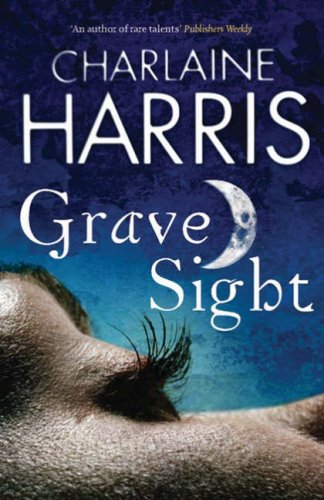
Grave Sight by Charlaine Harris

You would think that my first example of Charlaine Harris' writing on this blog would be one of the Southern Vampire Mysteries, right? Nope. Instead it's the first book of her lesser-known series, the Harper Connolly Mysteries, mainly because I didn't feel like reading about vampires just yet. So is there a reason that this series hasn't had the same explosion of popularity that True Blood has? 


Grave Sight follows Harper Connolly and her step-brother Tolliver Lang as they travel to a small town in the Ozark mountains to try and track down the body of a missing teenager. Despite their intention to help, they are not given a warm welcome, as Harper's ability to mentally sense the location of the dead and see their last moments, gained after she survived a lightning strike to the head, leaves many feeling uncomfortable. At first, things appear to go according to plan: they find the body, cash the cheque and leave town. It is when they are called back to the town after another death that events start spiralling out of their control. 
I really liked Grave Sight. As a mystery, it's well-crafted and suspenseful. Admittedly, I had kind of guessed the murderer by the sixth chapter or so, but my reasoning behind it was slightly off, so I guess it balances out in the end. Much of the suspense comes from the character of Harper and her relationship with the world around her. She's incredibly blunt and abrasive to other people, because she knows that her abilities attract the disgust of the majority of people that she encounters; why make the effort to try and pretty things up if people are automatically going to think the worst of you? This makes her attempts at detective work significantly more difficult, as most people just don't want to talk to her, let alone sit through an interrogation from her. The fact that she's essentially an emotional wreck and physically weakened from the lightning strike only makes her more interesting to follow, as it creates additional obstacles between her and what she wants to achieve. 
The one thing that confuses me is the way that Gollancz has marketed the book. The back cover proclaims that Grave Sight is part of their Gollancz Romancz range. Admittedly, there is a sort of love interest, but it's not written in a particularly sentimental or serious way: there's never any implication that the encounters with this love interest will lead to anything that could be considered permanent. The only thing it really adds is some tension between the step-siblings, as Tolliver is unhappy leaving Harper with someone whose motives he isn't sure of. 

A very good book, one that I think should get more attention. If you like Charlaine Harris' writing or paranormal mystery, but don't want to wade through a romantic sub-plot that takes up more space than the plot-plot, then this is a great pick. 4.5/5 

Next review: Single White Vampire by Lynsay Sands 

Signing off, 
Nisa. 

Tuesday, 27 August 2013

This One's a Lemon by H M Gordon

I picked this one up because of the title. I really can be that shallow sometimes. That it was a cyberpunk-style science-fiction book only made me more keen to pick it up. It was only later that I realised that the Internet had pretty much nothing on the novel. As far as I know, its only presence until now was the Amazon page. So this is kinda weird, knowing that this is possibly the first review of This One's a Lemon out there. I only hope I get this right.


This One's a Lemon is the first in the Tilde Slash trilogy.Set in the near future of an alternate timeline in which Europe and America essentially collapsed in on themselves in the years 2000-2010, it follows the aforementioned Tilde Slash. She's a small-time hacker who specialises in the extraction of data and programmes, so it's not unusual for someone to ask her to find their late husband's missing software. What makes it interesting is that his programme might well be the key to uploading the human consciousness and personality onto the Internet. It's the sort of thing that attracts the attention of people other than Tilde's client: for example, Lemon Computers, the dead programmer's former employers, who are quite keen to get their data back.
As a plot, I was expecting this to be far more direct than it turned out to be. While the action does keep moving at a fairly brisk pace, it does so in a rather indirect manner; it seems to move Tilde and the other characters from set piece to set piece quickly, but few of these set pieces clearly advance you in figuring out the plot as a whole. It's a weird mix of action and mystery that I want to define as a thriller, but can't quite commit to. There's also a romance sub-plot that actually works really well within the context of the novel: it's in no way sappy or sentimental, and it fits perfectly with what we know about the character of Tilde.
The characters are, for the most part, kind of uneven. Tilde and her love interest introduced later in the book are the ones that are developed the most, and it really shows. For those two, their dialogue and relationship seem organic and subtle; most of the other characters are given 2-4 chapters in the entire narrative to really interact with Tilde, which doesn't leave much room for fantastic character development. I kind of wish that some of the characters could have been saved for a later book in exchange for more development time. The same goes for a fair few plot elements that are introduced as events progress, but aren't really examined too closely due to lack of space. If given the choice of two extremes, then I would rather plump for too many ideas in too little space as opposed to the other way around, but it's still mildly disappointing when it happens.

Ultimately a fun, fast-paced novel that is let down a little bit by the odd pacing and the author's attempt to try and include too many ideas for the 300 pages that he was given. Probably one to recommend to cyberpunk fans who are looking for something a little less cerebral. One to miss if you aren't fond of adult situations or language. 4/5

Next review: Discord's Apple by Carrie Vaughn

Signing off,
Nisa.

Tuesday, 13 August 2013

Paris Noir edited by Aurelian Masson

Having started a work experience placement, it seemed like a good time to try a short story collection again. And what better place to start than Paris Noir, a collection of noir detective fiction set exclusively in the arondissements of Paris? I have a fascination with the noir style and visuals, so this seemed like a perfect idea.


The thing that I forgot about was the main reason why I don't read short story collections so much: unless it's all by one author, then the tone and quality can be really erratic. There were several stories that made me sit back and think, "That wasn't noir, in any way, shape or form." The ones that spring to mind in particular were "The Revenge of the Waiters" by Jean-Bernard Pouy and "No Comprendo The Stranger" by Herve Prudon. The former had an interesting set-up, but quickly devolved into a farcical adventure by waiters, while the latter was one man's rambling journey up the Rue de la Sante as he talks about his health. There were, however, more than enough stories in the collection to justify buying the book.
The collection starts out strong with the stories of "The Chauffeur", in which the eponymous driver falls in love with the prostitute he transports, "The Chinese Guy", a story of sexual obsession, and "Big Brother", an unsettling account of a robbery, all in quick succession. After those three the collection tails off a bit, but there are still gems left before the end in the form of "La Vie en Rose" and "Precious"; both are accounts of the murder of a woman, but each with a very different emphasis and tone.

Overall, patchy in terms of tone, with most of the really good stories right at the beginning. Still not a bad read though, as Paris is definitely a city that suits the noir sensibility. Probably a good recommendation for someone who loves Paris, noir fiction or both. 3/5

Next review: Zorro by Isabel Allende

Signing off,
Nisa